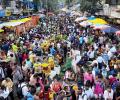
'When you plot the growth, -- 7.5 per cent for Q2, 0.4 per cent for Q3, 1.6 per cent for Q4 and 20.1 per cent for Q1 now -- all you see is a 'V'.' 'You don't see any other alphabet in the shape there.'

Despite the large economic impact of the Covid-19 pandemic, the markets have recovered sharply even though the performance among individual stocks has been quite polarised.
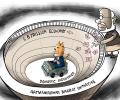
'The first year of the Modi government's second term has laid the roadmap for the future and we will embark on it with gusto,' promises Gopal Krishna Agrawal, the BJP's national spokesperson on economic affairs.

Noting that the situation on the ground was "very difficult", the Congress leader said it was high time the prime minister announced a relief package for the poor and a financial stimulus for the economy.

Finance Minister Nirmala Sitharaman on Saturday unveiled the budget for fiscal 2020-21, vowing to boost income of Indians and their purchasing power, in a bid to revive domestic economic growth that has slumped.

Moody's on Monday slashed India's growth forecast for 2020 to 5.4 per cent from 6.6 per cent projected earlier, on slower than expected economic recovery. In its update on Global Macro Outlook, Moody's Investors Service said India's economy has decelerated rapidly over the last 2 years and economic recovery is likely to be 'shallow'.

Hiring activity in the country touched an all-time high in July, witnessing a 11 per cent sequential increase, indicating a strong revival of economic growth and a recovery of business from the impact of COVID-19, a report said on Friday. With 2,625 job postings, hiring trends grew 11 per cent in July compared with 2,359 postings in June, the highest it has ever been, including the pre-COVID-19 timeline, according to the report by Naukri JobSpeak. The Indian job market has witnessed sequential growth for the second month in a row, with a 15 per cent rise in June, after the pandemic-linked decline in April and May, it stated.

'We would advise investors to invest in a disciplined way in equities for the long term.'

The government may have to resort, eventually and however unwillingly, to printing money, abandoned as policy and practice in the 1990, predicts T N Ninan.

Experts are of the opinion that though the second half of this financial year will see some recovery, volume growth is likely to remain in single digit as compared to the double-digit rise recorded in past years.

Services companies reported an increase in new work intakes, which they attributed to successful marketing efforts and strengthening demand.

"Had corona (COVID-19) not been there, the prime minister would have dedicated NATGRID to the country. I am hopeful that the prime minister will dedicate NATGRID to the country in some time," Union home minister Amit Shah said during the 51st Foundation Day event of the Bureau of Police Research and Development (BPRD) here on September 4.
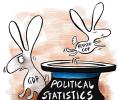
India Ratings and Research on Friday revised down India's FY22 real GDP growth forecast to 10.1 per cent, from earlier projection of 10.4 per cent, citing the second wave of COVID-19 infections and slower pace of vaccination. At a time when large parts of the country are experiencing tremendous pressure on medical infrastructure, the agency said it expects the second wave to start subsiding by mid-May. Earlier this month, the Reserve Bank maintained its 10.5 per cent GDP growth estimate, but Governor Shaktikanta Das has flagged the rising cases as the biggest impediment to recovery.

Hiccups in Chinese economy and the overall strength of the dollar will continue to be a drag on the rupee in the coming year

RCap had proprietary investment book of Rs 2,000 crore (Rs 20 billion) as on end-March and owns stake in a host of companies.

'This is happening regardless of the Budget.'

Khan's Pakistan Tehreek-e-Insaf (PTI) won 15 of 20 seats up for grabs in the politically crucial province of Punjab on Sunday, dealing a major blow to Prime Minister Shehbaz Sharif and his 13-party alliance led by the ruling PML-N.

Analysts attribute this withdrawal trend to the nervousness ahead of US presidential elections and the fact that the markets raced ahead even as the economic recovery remained fragile back home.

According to a new report by international management consulting firm Arthur D Little, the worst of COVID-19's impact will be felt by India's most vulnerable in terms of job loss, poverty increase and reduced per-capita income, which in turn will result in a steep decline in the Gross Domestic Product (GDP). "Given the continued rise of COVID-19 cases, we believe that a W-shaped recovery is the most likely scenario for India. This implies a GDP contraction of 10.8 per cent in FY 2020-21 and GDP growth of 0.8 per cent in FY 2021-22," the report said.

Concerns over economic slowdown, muted earnings, crisis in the auto industry and global trade issues have been weighing on investor sentiment, experts said.

'As we reach 2022 we are creating a very new, different India where the Citizenship Amendment Act will be passed, NRC will be pushed through, Article 370 scrapped...'

In an address at the Council of Heads of Government meeting of the eight-member SCO, Vice President Venkaiah Naidu said the most important challenge faced by the region is terrorism, particularly cross-border terrorism, and that India remained concerned about threats emerging from ungoverned spaces as well.
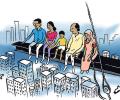
India's residential market is expected to sustain demand momentum despite rise in mortgage and property rates as sales this year across the top 7 cities are likely to breach pre-pandemic level of 2.62 lakh units, industry players said. After braving four back-to-back disruptions in form of demonetisation, RERA, GST and COVID-19 in the last 6 years, industry experts feel the housing market is going through a lot of structural changes and is now at the start of a long-term upcycle. Homebuyers body FPCE gives credit to the Real Estate Regulatory Authority (RERA) under the Real Estate (Regulation & Development) Act, 2016 for this improved buying sentiment.

Waves of foreign portfolio investments worth over Rs 51,000 crore splashed into the Indian market in 2021 as overseas investors turned net buyers of domestic securities for the third straight year while excess global liquidity and other factors steered the ebb and flow of their investing ways. With the global financial system still flush with liquidity, emerging market assets, especially equities, might well remain the preferred investment avenue for many more months to come, experts opined. As the equities sizzled during most of 2021, that also saw economy slowly coming back into the recovery path, Foreign Portfolio Investors (FPIs) turned net buyers but their investment is much less compared to net inflows of Rs 1.03 lakh crore in 2020.

Of the six-member rate-setting monetary policy committee, five members voted for a 25 bps cut while one by 40 bps, the RBI said.
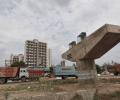
These could include strengthening the public-private partnership (PPP) dispute resolution mechanism, uniform PPP institutional framework, easier terms for infrastructure companies accessing bond markets, and tax sops, Business Standard has learnt. Investment in infrastructure projects with high multiplier effect has been the Centre's main plank to revive the economy, create employment and boost consumption.

'Stick to the known quality names, avoid short term thinking and don't be in a hurry to book profits on your winners.'

'The question is, how soon we can expect to re-attain the pre-lockdown levels of output and income.'
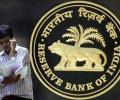
The Reserve Bank of India (RBI) on Friday kept key repo rate unchanged at 4 per cent in view of rising inflation and faint signs of economic growth amid gradual lifting of coronavirus (COVID-19) lockdown. The central bank's newly-constituted monetary policy committee (MPC) began its three-day meeting on October 7 and maintained the stance as accommodative. It also kept the reverse repo rate unchanged at 3.35 per cent.
.jpg)
Modi government must push reforms at a fast pace to restore growth.

Axis Bank was the top gainer in the Sensex pack, surging around 7 per cent, followed by Ultratech Cement, L&T, ICICI Bank, SBI, M&M and Bajaj Finance. On the other hand, Nestle India, Sun Pharma, Bharti Airtel and HUL ended in the red.
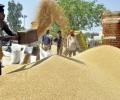
Pakistan Prime Minister Imran Khan announced on Monday that his government will allow India to send a humanitarian shipment of 50,000 metric tonnes of wheat to neighbouring Afghanistan through its territory after finalisation of the transit modalities.

In terms of stock selection, India continues to benefit from two phenomena - the big getting bigger and availability of quality stocks in relative abundance compared with its Asian peers.

Maruti has improved its sales in the recent past.

'The Olympics postponement may not be a political body blow to Abe Shinzo, but it is no denying that the economic cost of the postponement of the Games will be heavy for Japan,' observes Dr Rajaram Panda.

As the FM said, this is a Budget that lays the foundation for the next 25 years, observes Kumar Mangalam Birla.

Unless supported by investment, any spark of a recovery could be temporary, hint economists.

While sale of residential properties increased only marginally despite plethora of steps taken by the government through the year, office space leasing rose 40 per cent to touch an all-time high of 46.5 million sq ft -- a trend that drew investors to lap up India's first Real Estate Investment Trust at an issue size of nearly Rs 5,000 crore.

'If one crore is sanctioned to make a road, they spend only Rs 40 lakhs and the remaining 60 lakhs is looted by the politician, bureaucrats and the contractor.'

Congress leader and ex-finance minister P Chidambaram on Tuesday said the Union Budget was the "most capitalist" with nothing for the poor and farmers while sops were being provided to big industrialists turning India into a very "unequal country". At a press conference after Union Finance Minister Nirmala Sitharaman unveiled a Rs 39.45 lakh crore Budget, he said because of the ruling party's "brute majority" the Lok Sabha pass the Budget but people will reject it. He claimed the Bharatiya Janata Party was going to elections, scheduled in five states, not with their performance or with the promises and assurances to the people, but solely "with the agenda of dividing the country and bringing Hindutva back to power".
 © 2026 Rediff.com - Advertise with us - Disclaimer - Privacy Policy - Sitemap - Feedback - About us - Terms of use - Grievances